Overview

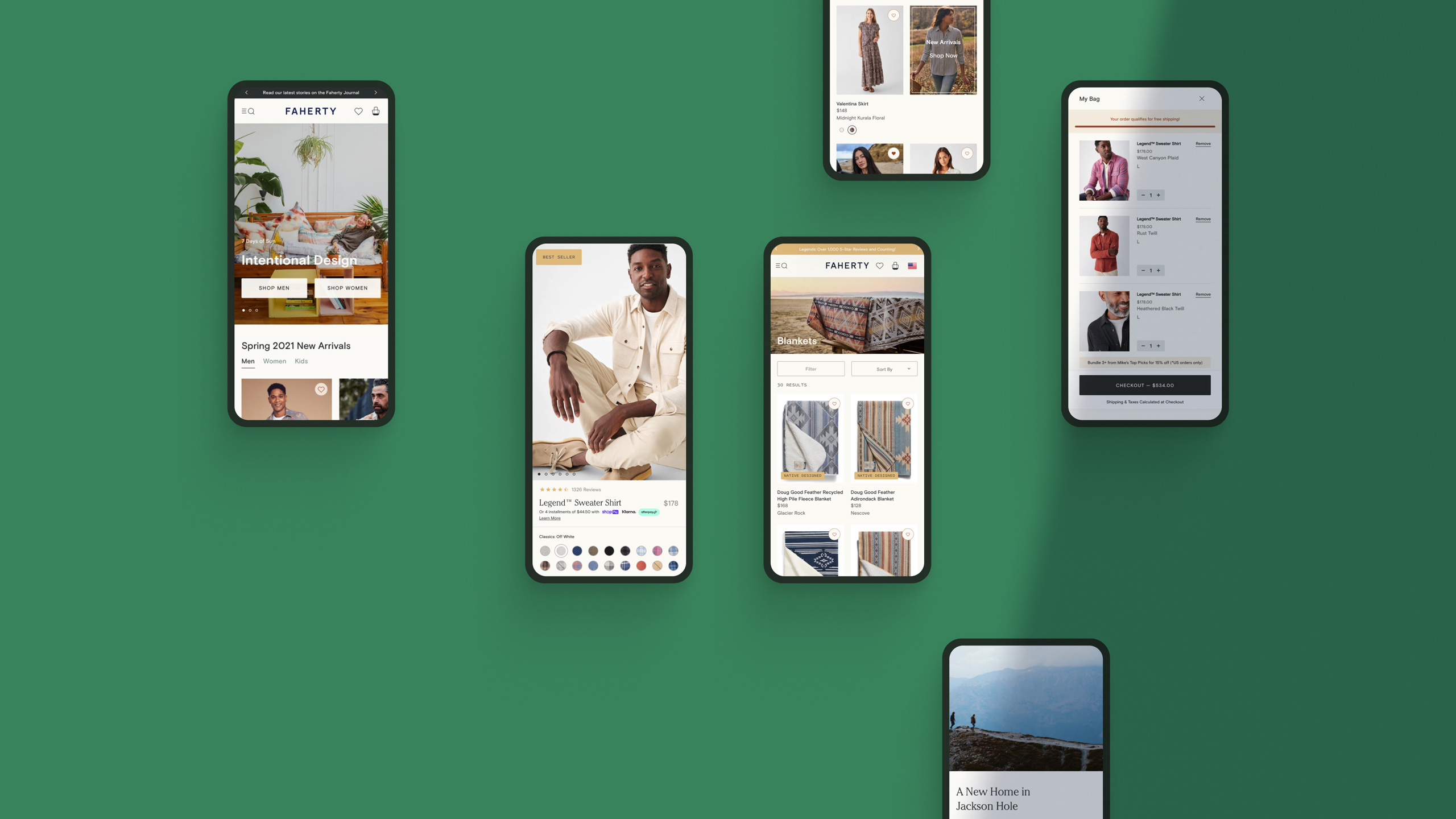
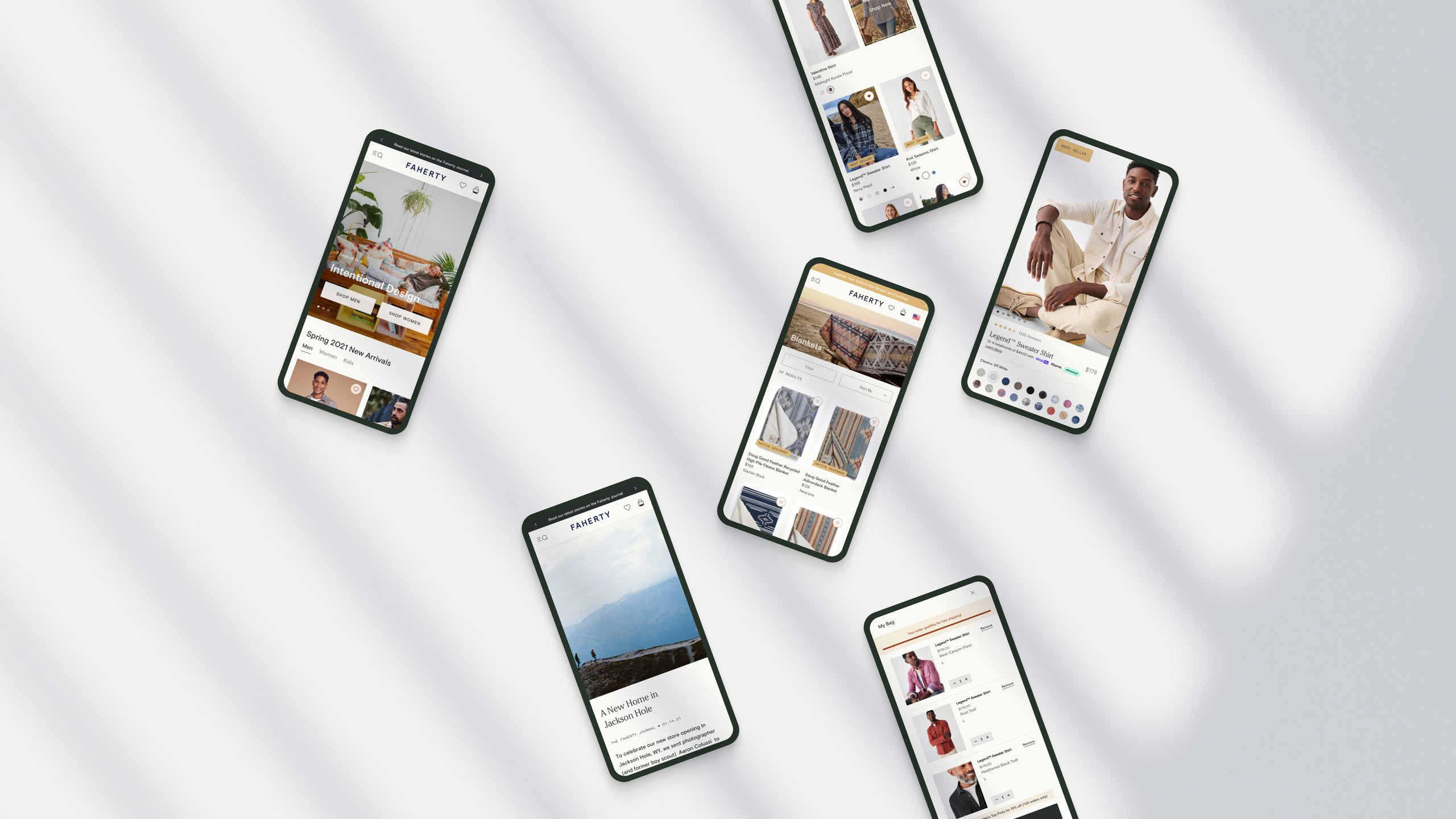
Faherty, a family-run, eco-friendly clothing brand, needed a website overhaul to support their growth and evolving brand identity. As the Design Lead, I was responsible for creating a scalable, flexible digital framework that could accommodate their expanding retail footprint, marketing efforts, and brand storytelling while maintaining their unique ethos.

My Contribution

I was involved across all phases of the project, responsible for:

  • Research & Discovery: Leading usability testing to identify friction points and growth opportunities
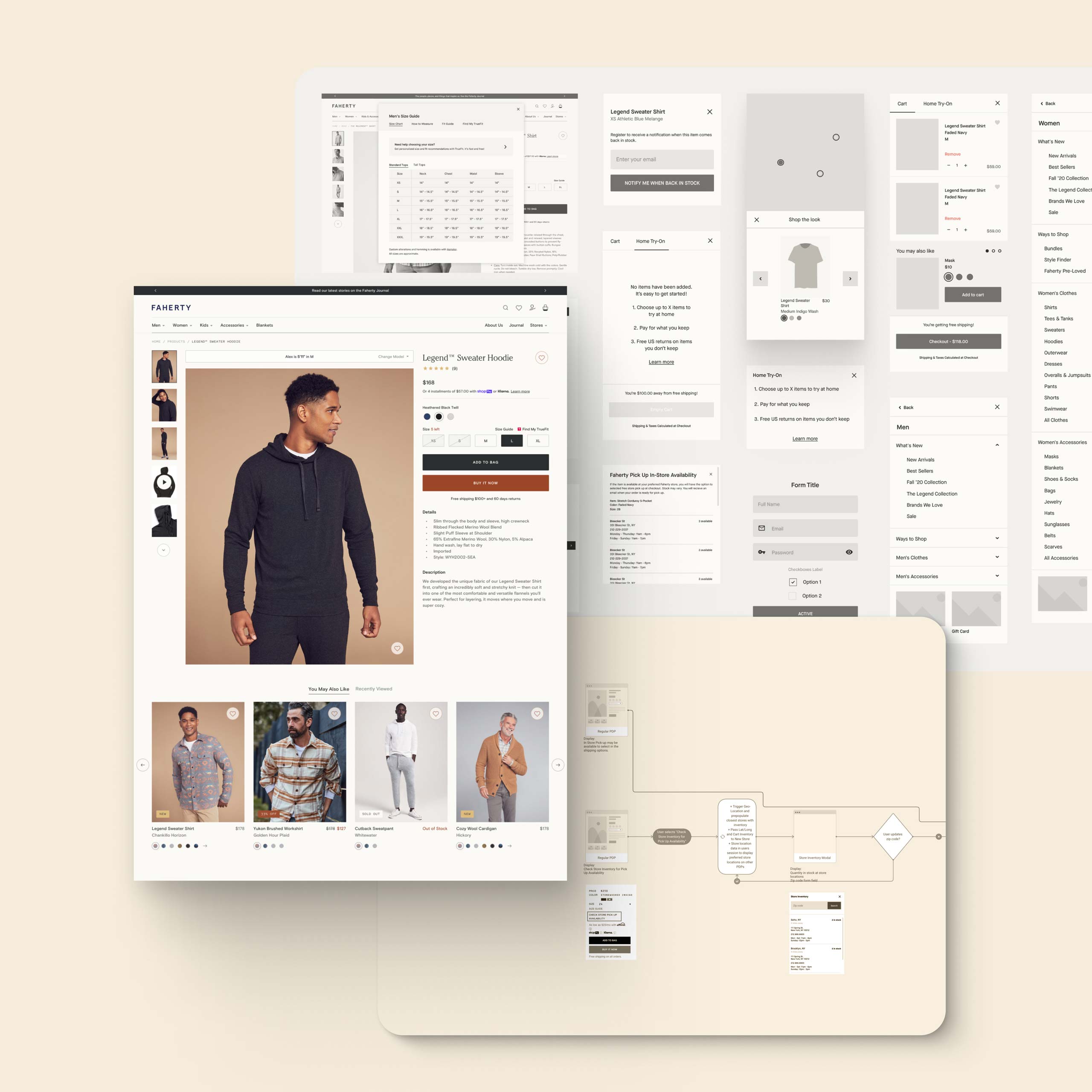
  • UX Architecture: Defining information architecture, priority user flows, and customer journey maps to align storytelling with conversion
  • Visual Direction: Creating visual concepts that translated brand warmth and craftsmanship into digital form
  • System Development: Establishing a scalable design system and UI library to support future campaigns and product launches
  • Collaboration: Partnering closely with product managers, engineers, and Faherty's in-house brand team to maintain balance between brand storytelling and DTC performance
The Team:

1 × project manager
1 × ux designer
1 × product designer
2 × engineers

Year

2021

Process

We started by defining the site's structure. I led workshops with stakeholders to define goals and ran a large-scale card-sort study with over 650 customers. The data revealed that users navigated fluidly between discovery, values, and lifestyle content, not just by product category. This insight helped us rebuild the information architecture around behavior.
Next, we mapped the full user journey, from discovery to purchase, using Flowmapp, a collaborative visual mapping tool. This transparency improved decision-making and alignment between our team and Faherty's.
To establish the site's visual language, we created style tiles that tested typography, colors, and photography. Weekly co-reviews with Faherty's brand and marketing teams helped us strike a balance between brand storytelling and performance.
Finally, we translated the approved designs into a modular, tokenized design system. Every element was reusable, empowering Faherty's internal team to create new pages and campaign modules autonomously.

Outcome

The redesigned website drove significant improvements in both user behavior and business performance:
  • 9% increase in average order value
  • 21% increase in conversion rate
  • Return on investment within one month
Beyond the metrics, the real success was the impact on Faherty's team. They gained control and autonomy over their digital presence, enabling them to create, experiment, and publish without relying on developer support. The new site provided a scalable foundation that could grow with the brand.