Overview

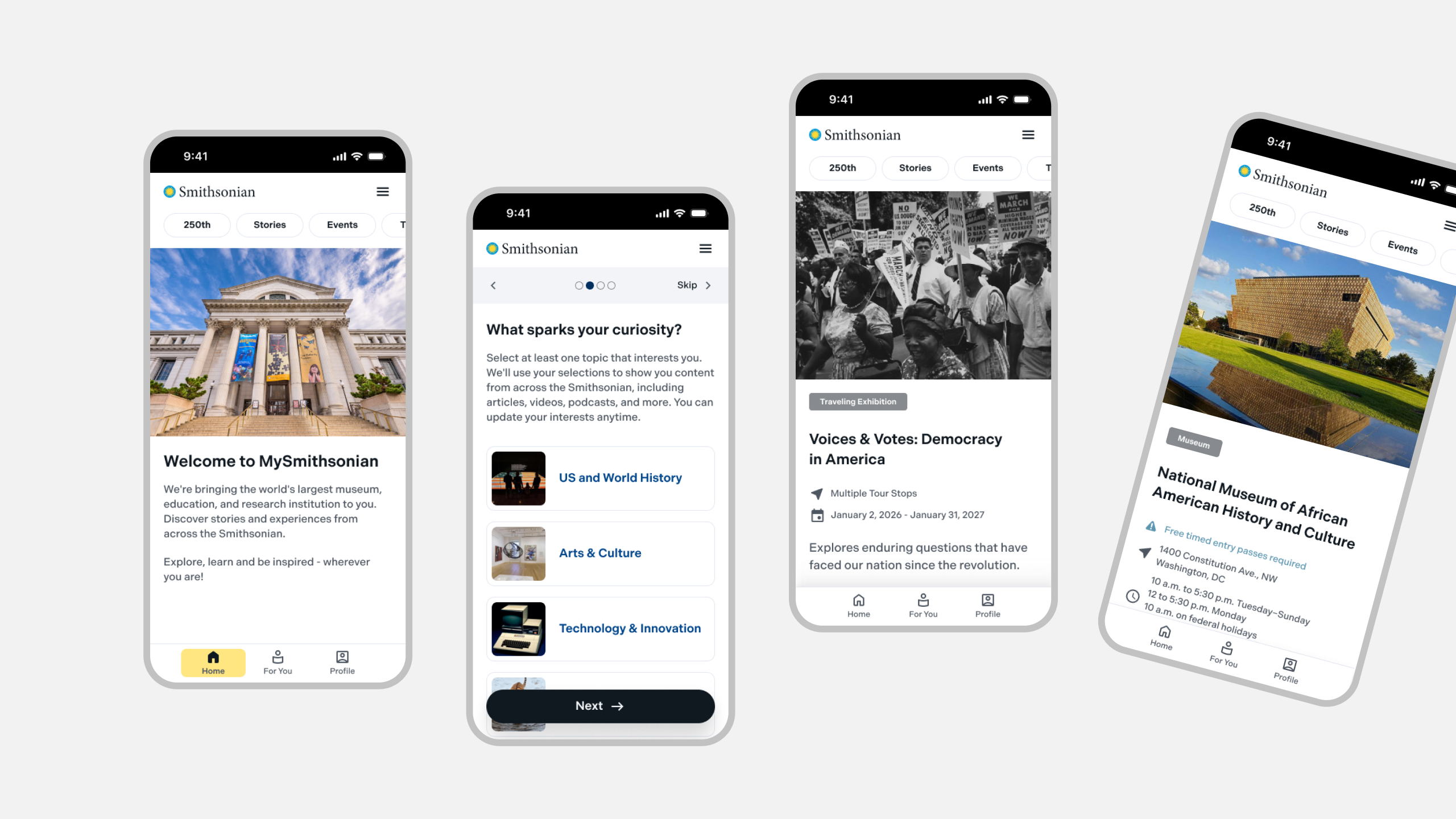
MySmithsonian was part of a larger digital initiative tied to the nation's 250th anniversary in 2026. The goal was to create a new platform that would make the Smithsonian's massive collection and network of museums feel more personal and accessible, designing an experience at a human scale. I led the design vision, visual system evolution, and prototype creation that would go before the Smithsonian Board and Secretary Lonnie Bunch III for approval.

My Contribution

I was involved across all phases of the project, responsible for:

  • Facilitating tone & alignment workshops
  • Directing visual concept explorations
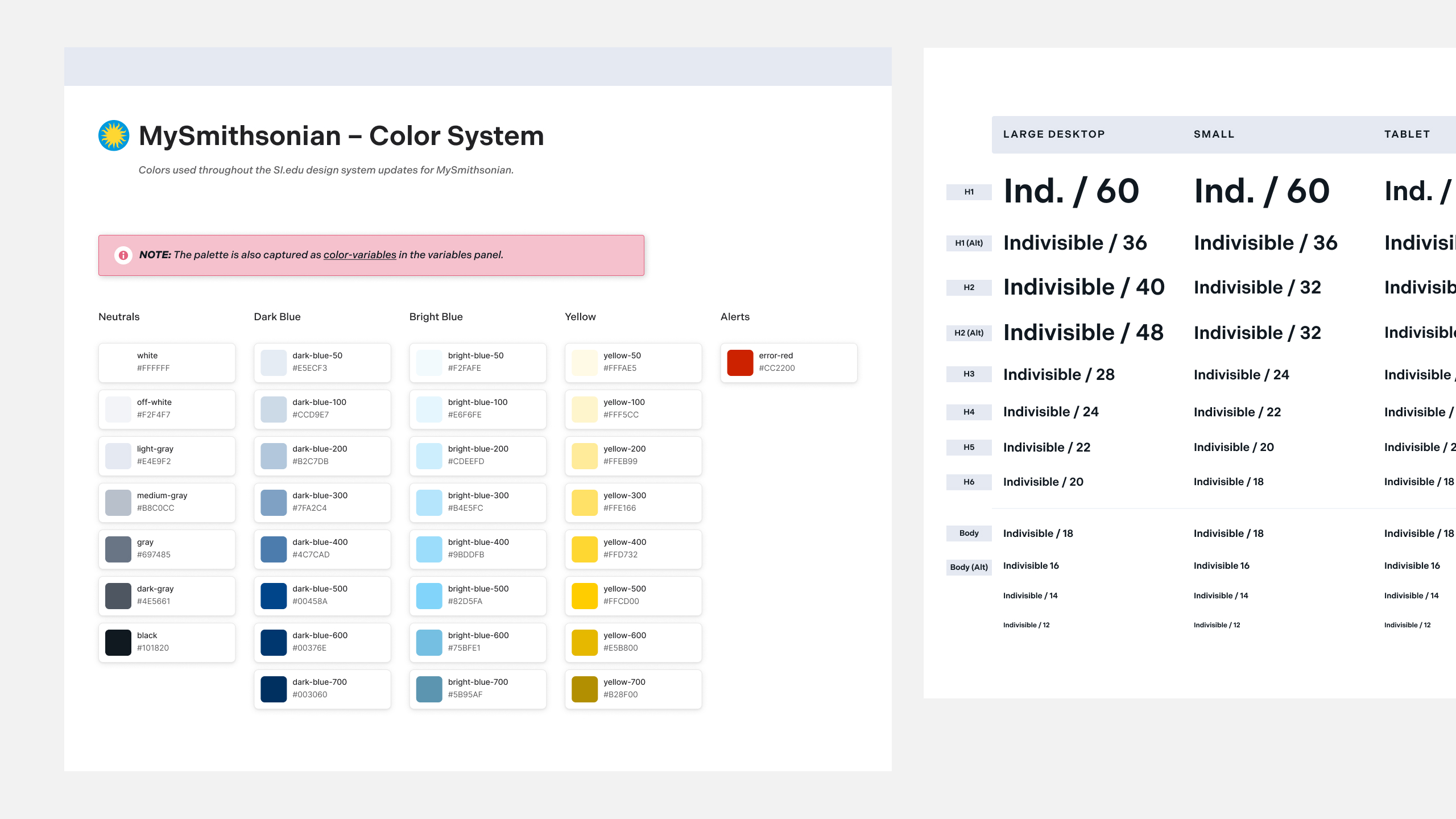
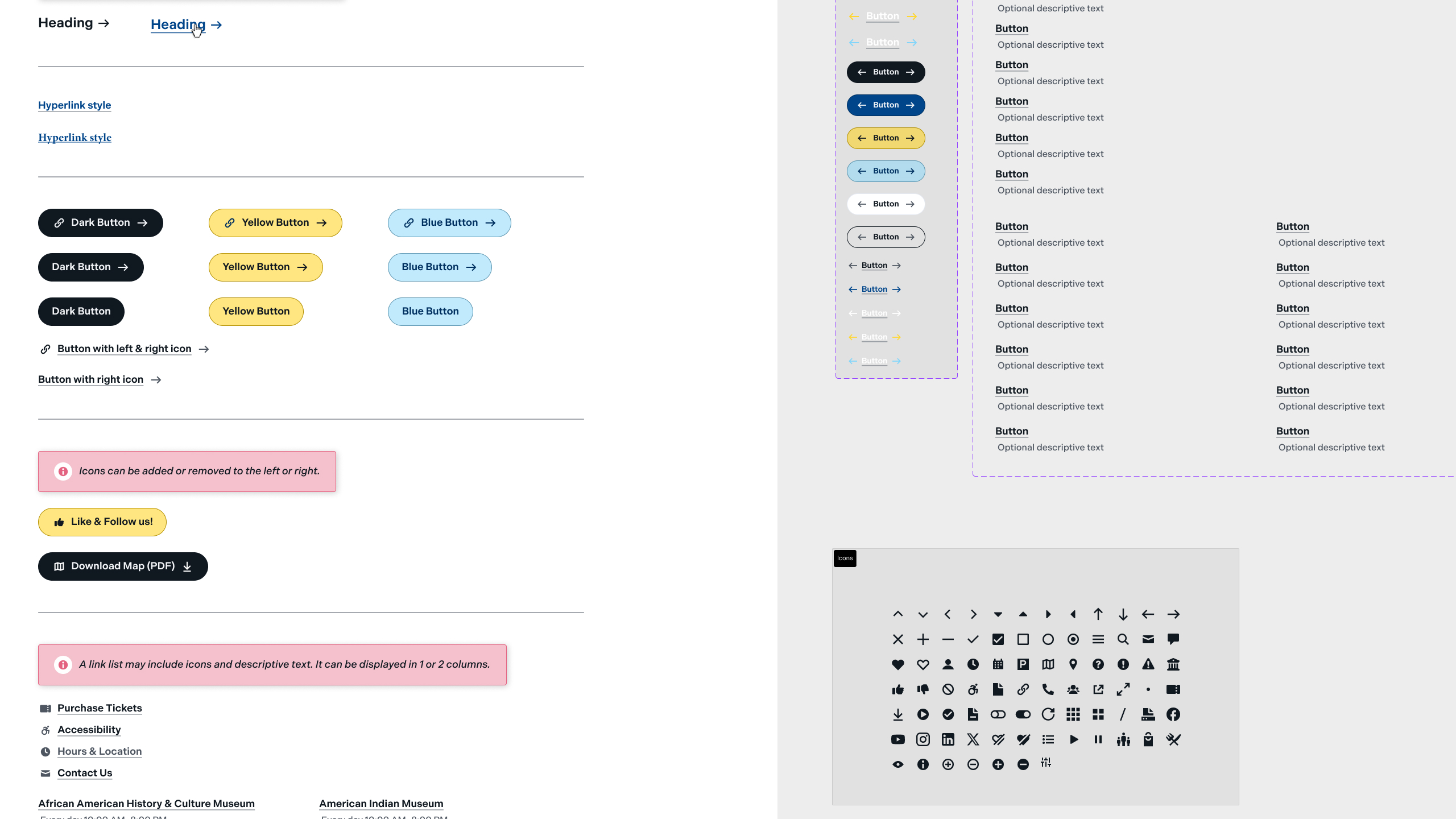
  • Building a component-based design system
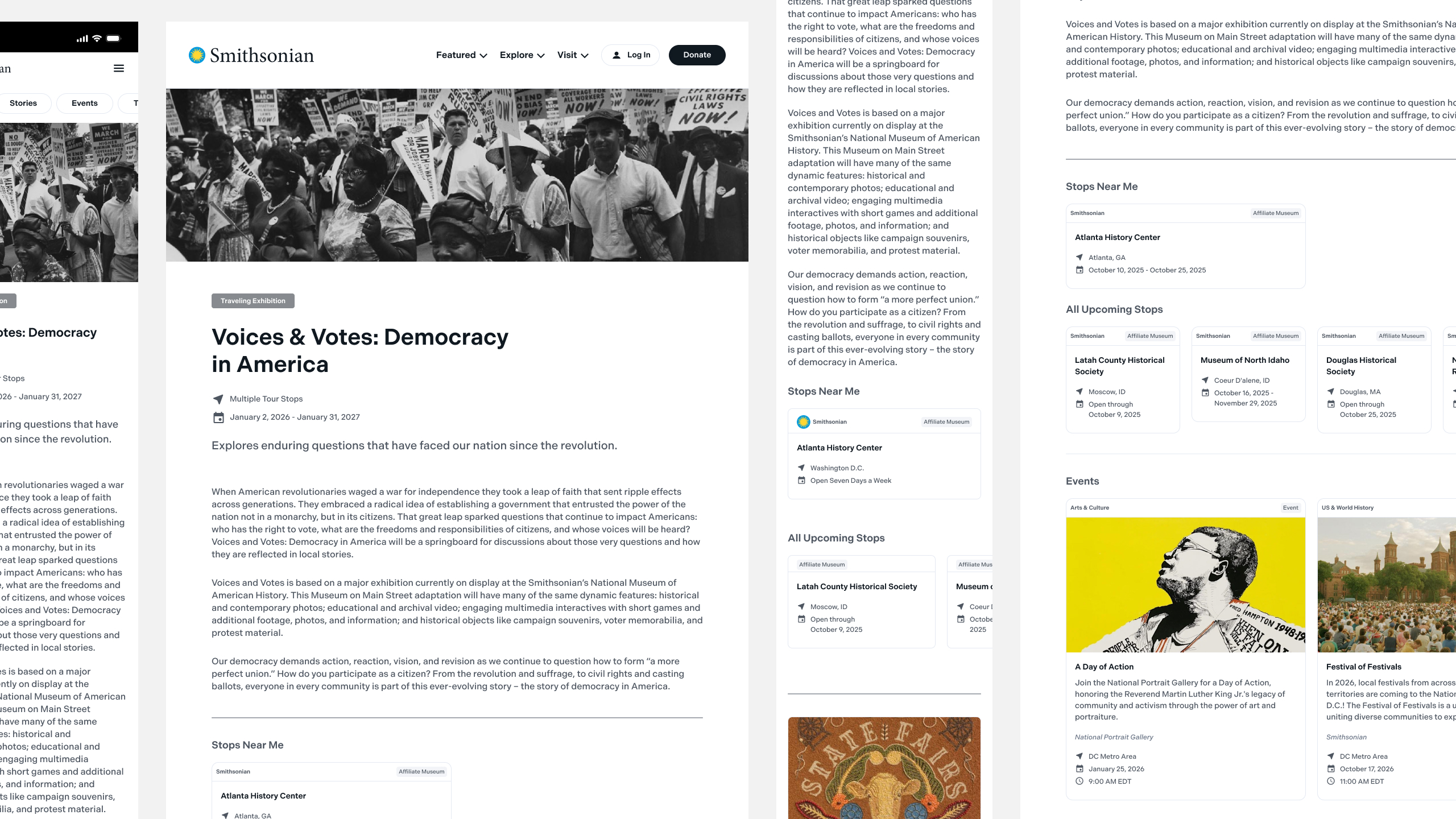
  • Creating prototypes & screen flows
  • Partnering with engineering on handoff
The Team:

1 × product manager
1 × ux designer
1 × product designer
3 × engineers

Year

2026

Process

With only 8 weeks from kickoff to board presentation, I needed to bring focus and stability by defining what was achievable, preventing scope creep, and turning ambiguity into a shippable plan.
I facilitated workshops to:
  • Reframe the conversation around exploration-driven platforms like Kayak and Airbnb, not media products like Netflix, grounding the team in the right mental model
  • Gather early feedback on annotated design explorations, validating the emotional direction without overcommitting
Rather than presenting multiple directions, I made a key call: show one well-justified concept rooted in refinement, not reinvention. I organized the visual design around three principles: clarity, calm, and confidence.
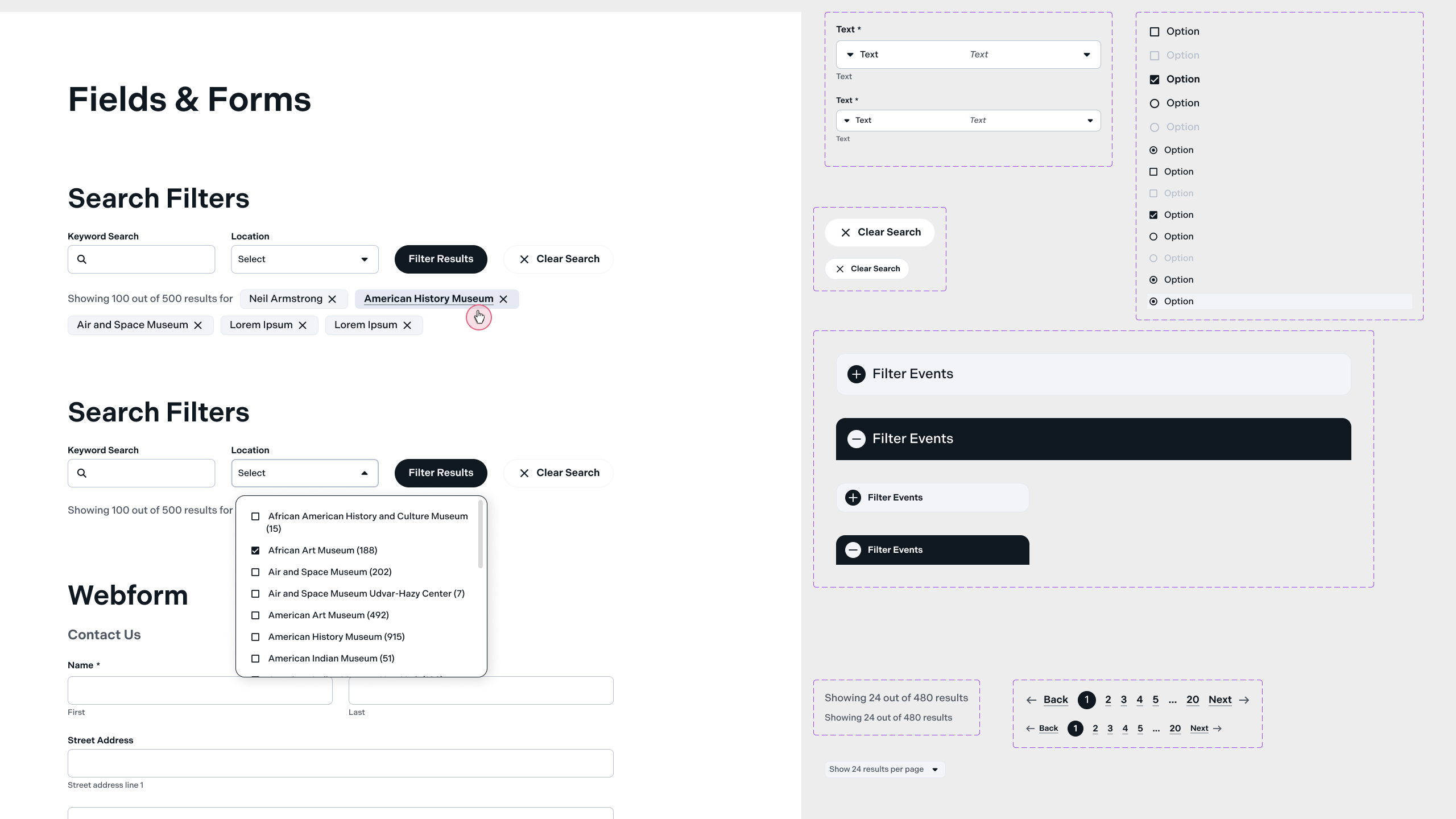
Every choice mapped back to these with fewer columns, softer contrast, simplified type hierarchy, and more visual breathing room. Small refinements that added up to a transformative, human-centered experience.

Outcome

When we presented the concept and prototype, we showed design and motion together so leadership could feel the experience, not just see it. The Smithsonian Board and Secretary Lonnie Bunch approved it in the first round, with feedback focused on content hierarchy and tone, proving the design was doing its job.
The most rewarding part wasn't the prototype itself, but the shift in team confidence. We went from "ambiguous and murky" to a shared vocabulary, a living system, and a repeatable process. That's what I consider design's true role: not just making things beautiful, but making the path forward clear.